
REEN 2026 Virtual Forum
📅 November 13, 2026 🌐 Fully Virtual | Global Participation
The calls for workshop proposals and WIP abstracts have now closed, but registration to attend the event and participate in the collaborative sessions remains open!
The REEN 2026 Virtual Forum, hosted by the Department of Engineering Education at Virginia Tech, aims to strengthen the global Engineering Education Research community through collaboration, mentorship, and capacity development.
The REEN 2026 Virtual Forum is free of charge and, to foster global participation, will offer three 2.5-hour sessions throughout the day. You are welcome to join any or all of them. Each session follows a shared structure:
Session times EST (UTC-5): 8:00 AM | 12:00 PM | 4:00 PM
- Plenary talk (40 minutes)
- General Q&A and large-group discussion (15 minutes)
- Collaboration breakout spaces (~90 minutes)
- Participant-driven workshops
- Work-in-progress (WIP) collaboration sessions
- Thematic discussion groups
Plenary talks led by global scholars (talk summaries)
- The Light Is Theirs: Reflections of a Lampshade
Dr. Xiaofeng Tang (8:00 AM)
- Leaving, Learning, Returning: Building Engineering Education in Our Home Contexts
Dr. Martha Cano & Dr. Arístides Carrillo (12:00 PM)
- Graduate Education: Thriving in a Changing Landscape
Dr. Holly Matusovich (4:00 PM)
Participant-driven workshops
Following each plenary session, participants can choose between two workshops. Across the forum, six workshops will be offered: four in English and two in Portuguese. Scroll down or click here to explore the workshop program.
Some workshops have limited capacity. Participants will be admitted on a first-come, first-served basis until all available spots have been filled.
Collaboration spaces moderated by REEN partners
Several participants will share emerging ideas and works in progress, creating opportunities to exchange feedback, refine projects, and spark new collaborations within the REEN community.
Join these collaborative sessions following the plenary talks to learn about innovative initiatives from around the world, contribute your perspective, and connect with colleagues who share your interests. You may even discover opportunities for future research and collaboration.
Click here or scroll down to find details on the collaborative sessions.
Plenary Speakers
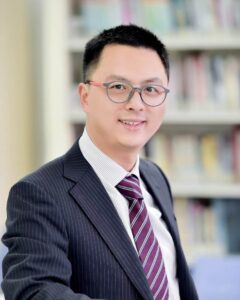
Xiaofeng
Tang
Xiaofeng “Denver” Tang is Professor of Research in the Institutes of Science and Development, Chinese Academy of Sciences. He was the founding Associate Director of the Division of Engineering Education at Tsinghua University.
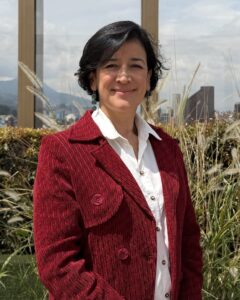
MArtha
Cano-morales
Martha Cano-Morales is a Professor at Pontificia Universidad Javeriana in Colombia, with a strong commitment to advancing engineering education and research in Colombia and Latin America.
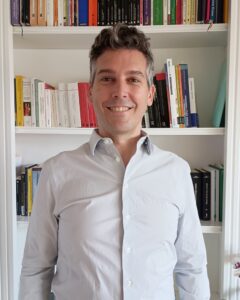
Arístides Carrillo-fernández
Arístides P. Carrillo-Fernández, Ph.D. (he/him/él), is an Adjunct Assistant Professor in the School of Engineering Education at Purdue University and a Lecturer at CIEE in Madrid, Spain.
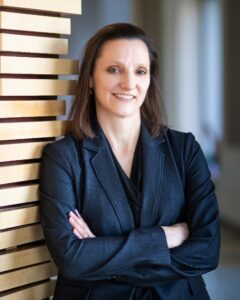
Holly
Matusovich
In addition to serving as an Associate Dean in the Graduate School, Dr. Holly Matusovich is the Associate Dean for Graduate and Professional Studies in the College of Engineering and a Professor in the Department of Engineering Education at Virginia Tech.
Hosted by:

In collaboration with:



Plenary Talk Summaries
The Light Is Theirs:
Reflections of a Lampshade
Xiaofeng Tang (8:00 AM)
In this talk, I reflect on my experience building China’s first graduate program in engineering education, an endeavor that goes beyond admitting students, designing curricula, and advising dissertations. Far more important is creating space to recognize and value the energy and ingenuity of a younger generation of researchers—and even their frustrations with the limitations of engineering education. These are sources of precious light that might otherwise be overlooked, dimmed, or lost amid rigid academic and institutional agendas. Over time, I have come to understand my role less as a source of illumination than as a lampshade: not to kindle their light or claim it as my own, but to recognize it, preserve it, and reflect it back to them. I suggest that this spirit has long been part of engineering education research at its best: a tradition of nurturing new voices and allowing their light to illuminate the field in new ways.
Leaving, Learning, Returning: Building Engineering Education in Our Home Contexts
Martha Cano & Arístides Carrillo (12:00 PM)
In this plenary talk, two non-traditional engineering education researchers reflect on their journeys from engineering practice to engineering education research. Through experiences that span different countries, professional sectors, and stages of life, they will discuss how engineering education opened new ways of understanding engineering itself, providing a shared language for addressing questions that cut across disciplines, institutions, and cultures. The speakers will share their experiences navigating doctoral studies later in their careers, the personal and professional challenges of transitioning into a new field, and the opportunities and tensions involved in returning to their home contexts. They will also reflect on the role of engineering education in addressing contemporary challenges, including equity, inclusion, and the rapid transformation of higher education in the era of generative AI. Drawing on their own experiences, they will explore what it means to build engineering education communities in contexts where the field is still emerging, and what opportunities lie ahead for the next generation of engineering education researchers.
Graduate Education:
Thriving in a Changing Landscape
Holly Matusovich (4:00 PM)
Current pressures on graduate education in engineering include a global landscape shaped by new technologies, shifting demographics, changing workforce demands, and a growing need for interdisciplinary research that solves complex societal challenges. As a result, graduate education is being asked to serve more purposes than ever before. This plenary will examine how these current pressures provide an opportunity to challenge traditional purposes and practices and reshape what graduate education can—and should—be. Drawing on research and experience in graduate student development, mentoring, faculty development, and academic leadership, the talk will consider questions such as: What outcomes should graduate education in engineering yield? Who gets to determine those outcomes? How might degree programs evaluate and evolve inherited models? What responsibilities do faculty, mentors, departments, institutions, and broader professional communities share in creating meaningful and transformative graduate experiences? Ultimately, this plenary will not propose a singular solution, but will offer a collaborative framework for reflection and action.
Workshop Program
| Workshop Title | Facilitators | Time | Session |
|---|---|---|---|
| Como a Inteligência Artificial Pode Transformar a Aprendizagem Ativa na Engenharia? |
Ricardo Luiz Perez Teixeira Bianca Cabral Caldeira Cynthia Helena Soares Bouças Teixeira |
9:00 AM ET (UTC-5) |
Session 1B (30 participants) |
| Let’s Play! Creating Entrepreneurial Mindset Focused Research Questions via a Card Game |
Cheryl Bodnar Rachel Kajfez Krista Kecskemety Winifred Opoku Darby Riley Cassie Wallwey |
9:00 AM ET (UTC-5) |
Session 1C |
|
From Framework to Practice: Designing Situational Judgment Items to Capture Relational Agency in Early-Career Academic Development |
Margaret Webb |
1:00 PM ET (UTC-5) |
Session 2B (20 participants) |
|
Do interesse comum à pesquisa colaborativa: construindo investigações em Educação em Engenharia |
Dianne Magalhães Viana Inês Direito Marcus Vinicius Melo de Lyra |
1:00 PM ET (UTC-5) |
Session 2C |
|
Engineering for and with People: Bringing Human-Centered Design into Engineering Education |
Saadeddine Shehab Brock Craft Sirena Hargrove-Leak |
5:00 PM ET (UTC-5) |
Session 3B (24 participants) |
|
Owning your Degree: Strategies for Success in Graduate School |
Holly Matusovich |
5:00 PM ET (UTC-5) |
Session 3C |
Collaborative Sessions
| Presentation Title | Presenter | Time | Session |
|---|---|---|---|
|
Vinculando la educación en ingeniería con el desarrollo rural: hacia una agenda de investigación sobre aprendizaje colaborativo en América Latina
De la evidencia a la estrategia: trayectoria del CI-CAL Matilda sobre la brecha de género en ingeniería en América Latina y el Caribe
Ingeniería para, con y desde las personas: una invitación desde el Human-Centered Engineering Consortium |
Sandra Ireri Cruz Moreno
Silvana Montoya Noguera
Cristián Vargas Ordóñez |
9:00 AM ET (UTC-5) |
Session 1D (Español) |
|
Investigating the role of AI on student curiosity in an inquiry-based course
Development of Transversal Competencies and Career Self-Management among Engineering Students |
Jennifer L. Herman
Lílian Barros Pereira Campos |
9:00 AM ET (UTC-5) |
Session 1E (English) |
|
Mapping the Mathematics–Engineering Curriculum Interface: A Scoping Review
Skipping the Struggle: When Generative AI Stands in for Novices’ Learning in Engineering and Computing |
Mashudu Mokhithi
Shabnam Wahed |
1:00 PM ET (UTC-5) |
Session 2D (English) |
|
Autoconsciência e autoliderança no desenvolvimento de competências intrapessoais de estudantes de graduação em engenharia |
Aline Cuato Lucateli Ruiz |
5:00 PM ET (UTC-5) |
Session 3D (Português) |
|
Collaboration and Research Opportunities Using MATLAB Grader and MATLAB Course Designer
Threshold Concepts in Visualization-enhanced Undergraduate Wireless Engineering Education |
Jaisohn Kim
Jackson G. Andrew Bettina Dahl Søndergaard |
5:00 PM ET (UTC-5) |
Session 3E (English) |
Hosted by: